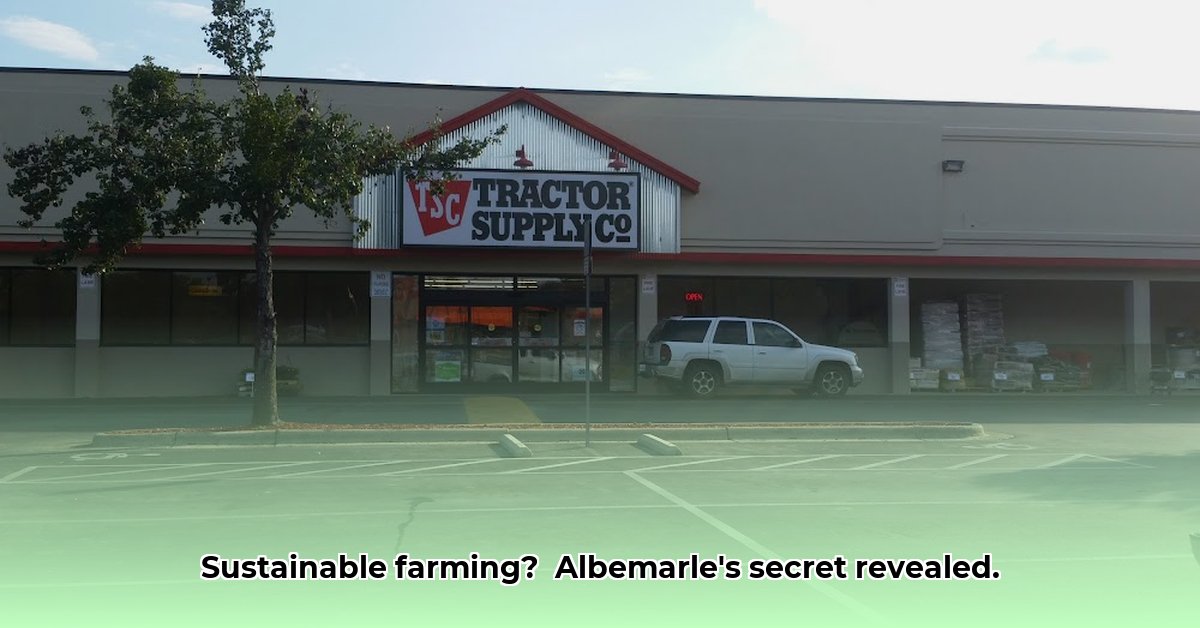
Tractor Supply in Albemarle, North Carolina, serves as a vital resource for local farmers and gardeners. But how environmentally conscious are your purchasing decisions? This article examines Tractor Supply's role in sustainable agriculture, highlighting its contributions and areas for improvement. We'll explore how you can make informed choices that benefit both your garden and the planet. For similar stores in other areas, check out other Tractor Supply locations.
What Tractor Supply Albemarle Offers: A Closer Look
Tractor Supply's vast inventory includes traditional farming supplies and items aligning with environmentally friendly practices. However, a lack of clear labeling regarding organic sourcing and the environmental impact of products presents both a challenge and a significant opportunity for improvement. Imagine the ease of choosing sustainable options if every product clearly indicated its origin, manufacturing process, and impact. This transparency would revolutionize sustainable farming support.
Beyond seeds, the fertilizers and pesticides offered raise questions. Do they reflect the latest environmentally responsible technologies? Are there readily available alternatives minimizing soil erosion or water contamination? Clearer indicators guiding consumers on environmental impact are crucial. While a detailed environmental footprint for each product might be unrealistic, key indicators like "organic" or "sustainably sourced" would empower consumers and encourage better environmental practices.
The same applies to animal feed. Where are the ingredients sourced? What farming methods were used? Is the packaging recyclable? These unanswered questions leave consumers guessing about the broader environmental implications. Understanding these details is vital for minimizing your environmental footprint.
Areas for Improvement: A Collaborative Effort
While Tractor Supply Albemarle offers a broad product range, greater transparency is essential. Knowing the environmental impact of a product is as crucial as understanding its function. For example, the knowledge that a fertilizer is organic and locally sourced dramatically changes our perception compared to a product with vague information. The same holds true for packaging; the use of recycled materials signals a company's commitment to sustainability.
To fully assess Tractor Supply's contribution to sustainable farming, we need a clearer picture of its supply chain. Understanding the environmental impact at every stage—from raw material sourcing to product disposal—is critical. Independent third-party audits could increase consumer trust and confidence.
Three Pivotal Points:
- Lack of Transparency: Inconsistencies in product labeling regarding sustainability hinder informed consumer choices.
- Potential for Improvement: Tractor Supply can significantly contribute to sustainable agriculture through increased transparency and a wider range of eco-friendly products.
- Shared Responsibility: Sustainable farming requires a collaborative effort from Tractor Supply, local farmers, and the community.
Actionable Steps: A Shared Responsibility
Steps for Tractor Supply Albemarle:
- Enhanced Product Labeling: Implement clear, concise, and highly visible labeling highlighting sustainable products.
- Partner with Local Farms: Build relationships with nearby sustainable farms to source products locally, reducing transportation emissions and supporting the local economy.
- Educational Initiatives: Host workshops and seminars showcasing sustainable farming practices. Educating customers empowers better choices.
- Supply Chain Transparency: Publish an annual sustainability report detailing sourcing practices, packaging, and environmental impact reduction efforts.
- Sustainable Product Expansion: Actively seek out and stock a wider range of truly sustainable products.
Steps for Local Farmers:
- Informed Purchasing: Carefully examine product labels and prioritize sustainable options; ask questions about product origins.
- Sustainable Practices Adoption: Explore and implement sustainable farming techniques like crop rotation and reduced tillage.
Steps for the Albemarle Community:
- Support Sustainable Businesses: Consciously choose businesses committed to sustainability.
- Advocate for Change: Voice your opinions to Tractor Supply regarding transparent and sustainable practices.
- Educate Yourself: Learn about sustainable agriculture and share that knowledge with others.
How to Find Sustainably Sourced Seeds and Feed at Tractor Supply
Finding eco-friendly options at Tractor Supply requires careful label reading and engaging with staff. Look for certifications like USDA Organic. Ask employees about sourcing – their input promotes transparency. For seeds, consider heirloom or open-pollinated varieties, though these aren’t always organic. Think critically about packaging and transportation distances – locally sourced options generally have a lower carbon footprint.
Actionable Steps for Consumers:
- Advocate for Transparency: Ask Tractor Supply for clearer sustainability labeling.
- Support Local Farmers: Supplement Tractor Supply purchases by supporting local farmers' markets.
- Embrace Composting: Reduce environmental impact and enrich your soil through composting.
- Educate Yourself: Learn about sustainable gardening practices and make informed purchasing decisions.
By taking these actions, you significantly contribute to a more sustainable agricultural future.